
In today’s digital world, social media has become one of the most powerful ways for businesses to connect with their target audience. Platforms such as Instagram, Facebook, YouTube, LinkedIn, and TikTok allow businesses to communicate directly with customers, promote their products and services, and build a strong online presence.
Social Media Marketing is the process of using social media platforms to promote a brand, connect with an audience, increase engagement, generate leads, and achieve business goals. It is not simply about posting pictures or videos. Successful social media marketing requires proper planning, creative content, audience research, consistency, and performance analysis.
Whether you are a small business, freelancer, startup, personal brand, or large company, social media can help you reach potential customers and create meaningful relationships with your audience.https://www.investopedia.com/terms/s/social-media-marketing-smm.asp
In this guide, we will explore what social media marketing is, why it is important, the major platforms, effective strategies, common mistakes, and how businesses can measure their results.
What Is Social Media Marketing?
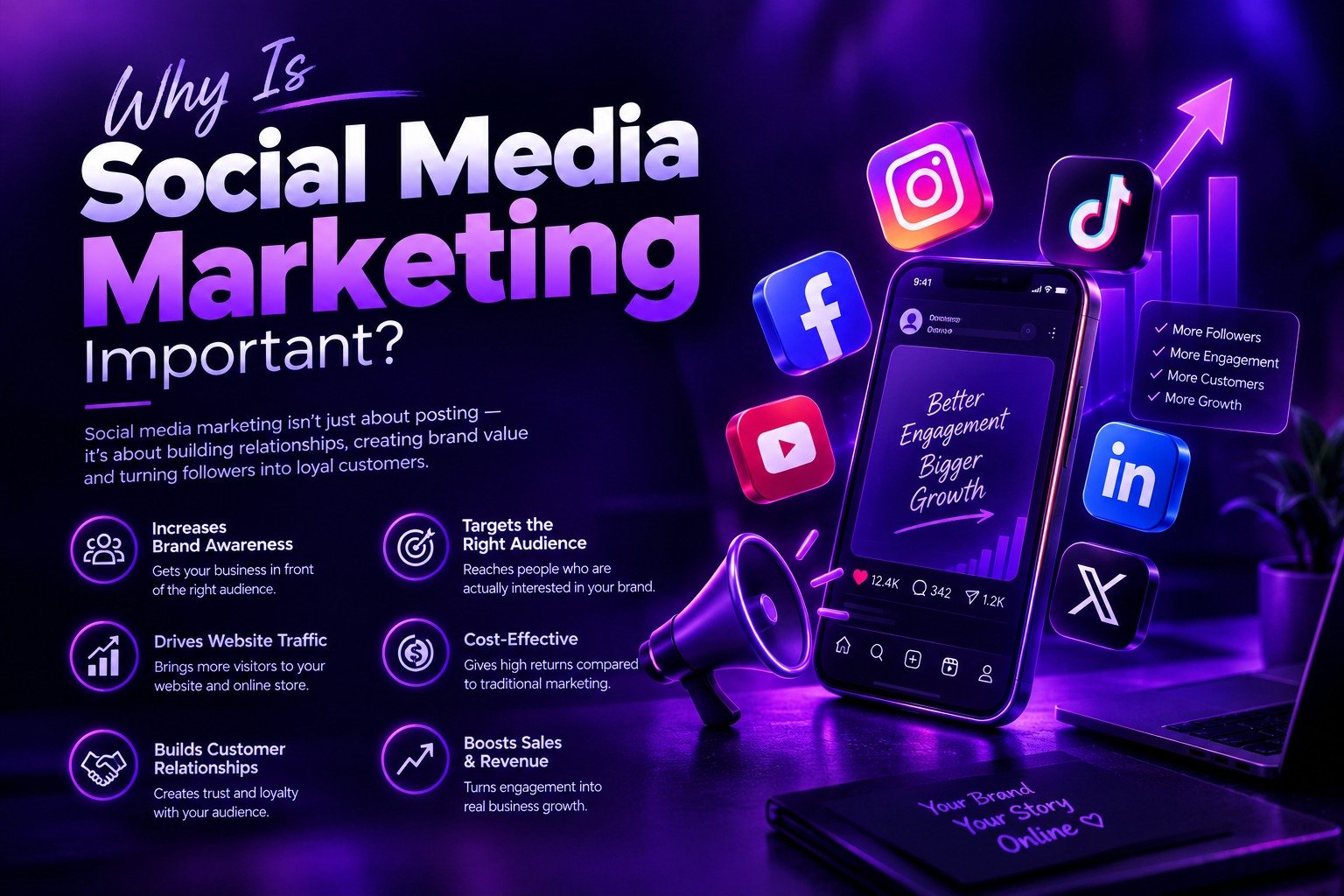 Social media marketing is a digital marketing method where businesses use social media platforms to promote their brand, products, services, or content.
Unlike traditional advertising, social media allows businesses to have two-way communication with their audience. Customers can comment, share, like, message, and interact directly with a brand.
For example, a clothing business can use Instagram to showcase new products through photos, Reels, Stories, and customer-generated content. A digital marketing agency can use LinkedIn to share marketing tips and industry insights. A restaurant can use Facebook and Instagram to promote new dishes, offers, and customer experiences.
The main purpose is not always to make an immediate sale. Social media marketing can also focus on building awareness, trust, engagement, and long-term customer relationships.
Why Is Social Media Marketing Important?
Social media has changed how businesses communicate with customers. People spend a significant amount of time consuming content online, which creates opportunities for brands to reach them where they already spend their time.
1. Builds Brand Awareness
One of the biggest advantages of social media marketing is increased brand awareness.
Regularly publishing useful and engaging content helps more people discover your business. When users repeatedly see your brand on their social media feeds, they may become more familiar with your products or services.
For example, a local digital marketing professional can publish SEO tips, marketing advice, and website design content. Over time, people interested in digital marketing may begin to recognize the person as a knowledgeable professional.
2. Helps Reach the Target Audience
Social media platforms provide businesses with opportunities to reach specific groups of people.
Businesses can create content based on audience interests, location, age group, profession, behavior, and other relevant factors. Paid advertising can make this targeting even more specific.
This means businesses do not always have to communicate with everyone. They can focus their efforts on people who are more likely to be interested in their products or services.
3. Increases Customer Engagement
Social media allows customers to interact directly with brands.
Comments, likes, shares, messages, polls, questions, and other interactive features help businesses understand what their audience thinks.
High engagement can also make a brand feel more active and approachable.
4. Generates Leads and Sales
Social media can support lead generation and sales when used strategically.
Businesses can direct users to their websites, landing pages, product pages, contact forms, or messaging platforms. Promotional campaigns, educational content, product demonstrations, and testimonials can help move potential customers toward a purchase decision.
5. Builds Trust and Credibility
People are more likely to trust a brand that consistently provides useful information and communicates professionally.
Sharing educational content, customer reviews, behind-the-scenes content, case studies, and real experiences can help businesses appear more authentic.
Major Social Media Platforms for Marketing
Different social media platforms have different audiences and content formats. Businesses should select platforms based on their target audience and marketing objectives.
Instagram is highly visual and is particularly useful for brands that can communicate through images and videos.
Businesses can use:
- Instagram Reels
- Stories
- Carousel posts
- Images
- Live videos
- Highlights
- Direct messages
Fashion, food, fitness, travel, beauty, photography, and personal brands can benefit greatly from Instagram marketing.
Facebook remains useful for businesses that want to build communities, share different types of content, and run targeted advertising campaigns.
Businesses can use Facebook Pages, Groups, videos, posts, Stories, and advertisements to communicate with customers.
YouTube
YouTube is ideal for long-form and educational video content.
Businesses can create:
- Tutorials
- Product reviews
- How-to videos
- Educational videos
- Interviews
- Demonstrations
- Shorts
Video content can help businesses demonstrate expertise while providing valuable information to their audience.
LinkedIn is particularly valuable for B2B businesses, professionals, freelancers, agencies, and personal branding.
Businesses can share industry knowledge, professional insights, case studies, company updates, and educational content.
TikTok
TikTok focuses heavily on short-form video content and creative entertainment. Brands can use it to reach audiences through trends, educational videos, storytelling, product demonstrations, and creative content.
The right platform depends on the target audience rather than simply choosing the platform with the largest number of users.
How to Create an Effective Social Media Marketing Strategy
Posting content randomly is unlikely to produce consistent results. A proper strategy helps businesses understand what to publish, who to target, and how to measure success.
Step 1: Define Your Goals
The first step is to identify what you want to achieve.
Common social media goals include:
- Increasing brand awareness
- Growing followers
- Improving engagement
- Generating leads
- Increasing website traffic
- Promoting products
- Increasing sales
- Building a community
- Improving customer relationships
Clear goals make it easier to measure performance.
Step 2: Understand Your Target Audience
Knowing your audience is essential.
You should understand:
- Who they are
- What they need
- What problems they face
- What type of content they prefer
- Which platforms they use
- What questions they ask
- What motivates them to purchase
When you understand your audience, creating relevant content becomes easier.
Step 3: Choose the Right Platforms
You do not need to be active on every social media platform.
Choose platforms where your target audience is most active and where your content can perform well.
For example, a professional service provider may focus more on LinkedIn, while a fashion brand may prioritize Instagram.
Step 4: Create Valuable Content
Content is at the center of social media marketing.
Good content should provide value to the audience. It can educate, entertain, inspire, inform, or solve a problem.
A business can create different content categories such as:
- Educational content
- Promotional content
- Entertainment content
- Inspirational content
- Behind-the-scenes content
- Customer testimonials
- User-generated content
- Industry news
A balanced content strategy is usually more effective than constantly posting promotional messages.
Step 5: Create a Content Calendar
A content calendar helps businesses organize their posts.
Instead of deciding what to post every day, you can plan content in advance.
For example:
Monday: Educational post
Tuesday: Short video
Wednesday: Customer testimonial
Thursday: Industry tip
Friday: Promotional content
Saturday: Behind-the-scenes content
Sunday: Inspirational content
The exact schedule can change depending on the business and audience.
Step 6: Focus on Visual Quality
Social media is highly visual. High-quality images, videos, graphics, thumbnails, and designs can make content more attractive.
However, quality does not always mean expensive production. Clear communication, good composition, readable text, and consistency can make a significant difference.
Tools such as Canva can help beginners create professional-looking social media graphics.
The Importance of Consistency
Consistency is one of the most important elements of social media marketing.
Posting once and disappearing for several weeks makes it difficult to build a strong audience.
Consistent content helps your audience remember your brand and gives you more opportunities to communicate with potential customers.
However, consistency does not mean posting low-quality content every day. It is better to create useful content on a realistic schedule that you can maintain over time.
The Role of Hashtags and Keywords
Hashtags and keywords can help social media platforms understand the topic of your content.
For example, a digital marketing post may use relevant terms related to:
- Digital Marketing
- SEO
- Social Media Marketing
- Content Marketing
- Google Ads
- Web Design
Hashtags should be relevant to the content rather than simply adding a large number of unrelated hashtags.
Keywords are also becoming increasingly important because users often search for information directly within social platforms.
Organic Social Media Marketing vs Paid Advertising
Social media marketing can generally involve both organic and paid approaches.
Organic Marketing
Organic marketing refers to content and interactions that do not involve direct advertising costs.
Examples include:
- Regular posts
- Reels
- Stories
- Comments
- Community engagement
- Educational content
- User-generated content
Organic marketing can take time but can help build a genuine community.
Paid Social Media Advertising
Paid advertising involves paying a platform to show advertisements to a targeted audience.
Platforms such as Facebook and Instagram allow advertisers to create campaigns based on different objectives.
Businesses can use paid advertising to:
- Generate leads
- Increase website traffic
- Promote products
- Increase conversions
- Build awareness
- Retarget potential customers
The best approach often combines organic content with paid advertising rather than depending entirely on one method.
Common Social Media Marketing Mistakes
Many businesses struggle with social media because of avoidable mistakes.
Posting Without a Strategy
Publishing random content without a clear goal can waste time and resources.
Focusing Only on Selling
If every post says “Buy Now,” audiences may lose interest.
Businesses should provide value before asking customers to make a purchase.
Ignoring Comments and Messages
Social media is about communication. Ignoring customer questions can negatively affect the relationship between a brand and its audience.
Inconsistent Posting
Long gaps between posts can make it difficult to maintain audience interest.
Copying Competitors
Competitor research is useful, but copying another brand’s content does not create a unique identity.
Businesses should develop their own voice, visual style, and content ideas.
Not Tracking Performance
Without analytics, it is difficult to understand what works and what needs improvement.
How to Measure Social Media Marketing Success
Likes and followers are not the only indicators of success.
Businesses should track metrics based on their goals.
Important metrics include:
Reach
Reach measures how many unique users have seen your content.
Impressions
Impressions represent how many times content has been displayed.
Engagement Rate
Engagement can include likes, comments, shares, saves, and other interactions.
Click-Through Rate
Click-through rate helps measure how many users clicked on a link or advertisement.
Website Traffic
Businesses can monitor how much traffic comes from social media platforms.
Leads
Lead generation is particularly important for service-based businesses.
Conversions
Conversions can include purchases, registrations, bookings, downloads, or other desired actions.
The most useful metrics depend on the business objective.
The Future of Social Media Marketing
Social media marketing continues to evolve as technology and user behavior change.
Short-form video, artificial intelligence, personalization, influencer marketing, social commerce, and community-driven content are becoming increasingly important.
Artificial intelligence can help marketers generate ideas, analyze data, research audiences, and improve content workflows. However, creativity, originality, human understanding, and strategic thinking remain important.
Audiences are also becoming more selective. Simply producing more content is not enough. Businesses need to create content that is useful, authentic, relevant, and engaging.
Conclusion
Social Media Marketing has become an important part of modern digital marketing. It provides businesses with opportunities to build awareness, communicate with customers, increase engagement, generate leads, and support long-term growth.
A successful strategy starts with understanding the target audience and defining clear goals. Businesses should then choose the right platforms, create valuable content, maintain consistency, engage with their audience, and regularly analyze performance.
Social media is not simply a place to advertise products. It is an opportunity to build relationships, demonstrate expertise, tell stories, and create a community around a brand.
For businesses that are willing to provide value, remain consistent, and adapt to changing trends, social media marketing can become a powerful tool for building a strong and recognizable online presence.
auther:Jesil K T