
https://www.jasper.ai/blog/ad-copywriting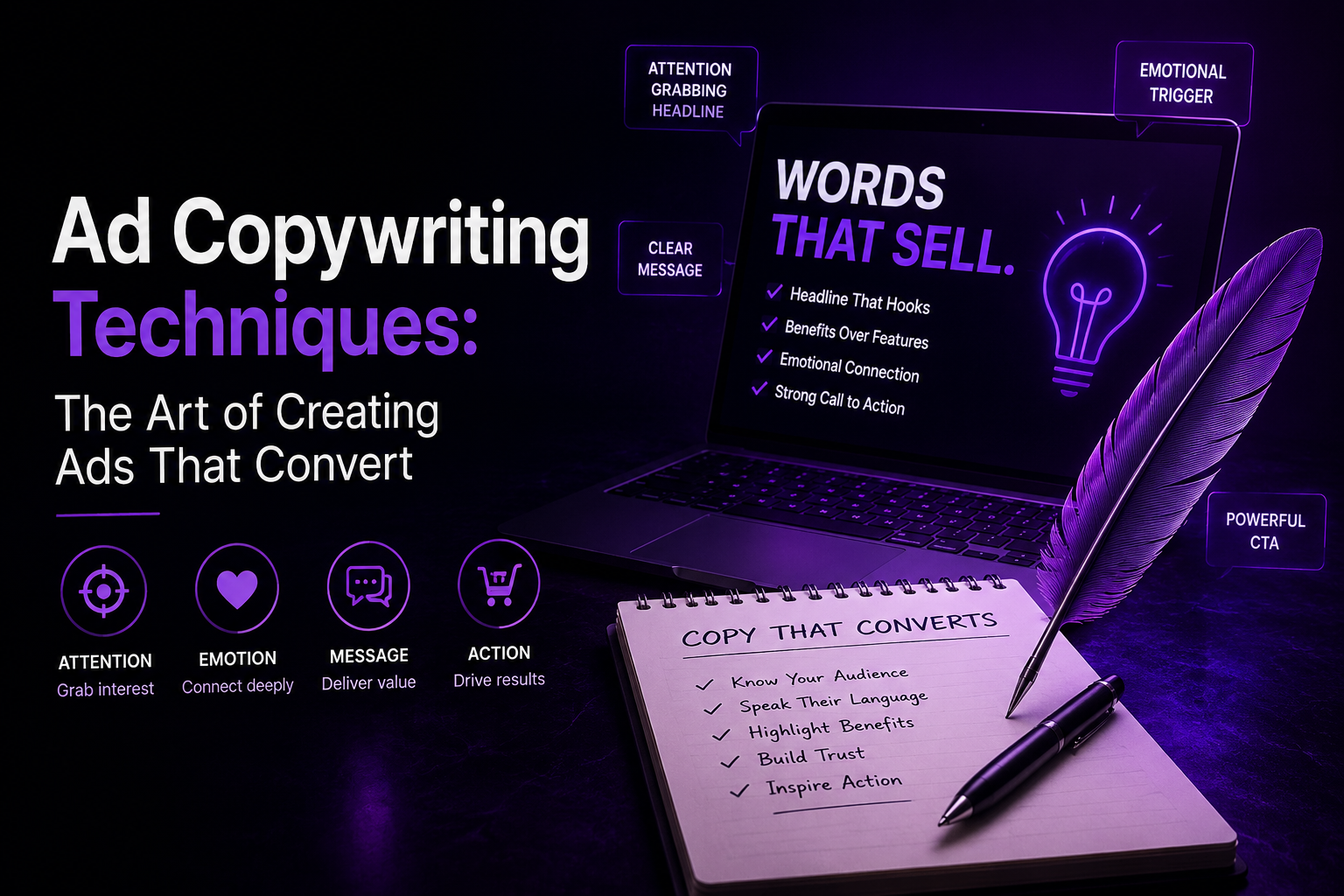
In today’s digital world, advertising has become an essential part of every business. Whether a company is selling products, services, courses, applications, or experiences, it needs effective advertising to reach the right audience. Ad Copywriting Techniques play an important role in creating advertising messages that attract attention, communicate value, and encourage customers to take action.
However, simply displaying an advertisement is not enough. People see hundreds of advertisements every day on search engines, social media platforms, websites, mobile applications, and video platforms. Because of this competition, businesses need effective ad copywriting strategies that can immediately capture attention and persuade people to take action. This is where Ad Copywriting Techniques become extremely important for creating high-performing advertisements.
Ad copywriting is the process of creating persuasive written content for advertisements. It includes headlines, descriptions, taglines, captions, calls-to-action, promotional messages, and other forms of advertising text. Effective ad copywriting techniques help businesses communicate the value of their products or services and motivate the audience to perform a desired action, such as clicking an advertisement, making a purchase, filling out a form, downloading an application, signing up for a service, or contacting a business.
Effective Ad Copywriting Techniques combine creativity, psychology, marketing strategy, audience research, keyword research, and data analysis. A good copywriter understands what the target audience wants, identifies their problems, presents a suitable solution, and communicates that solution in a simple and convincing way. By using the right ad copywriting techniques, businesses can create engaging ad copy, improve audience engagement, generate leads, and increase conversions.
 1, Understanding the Target Audience
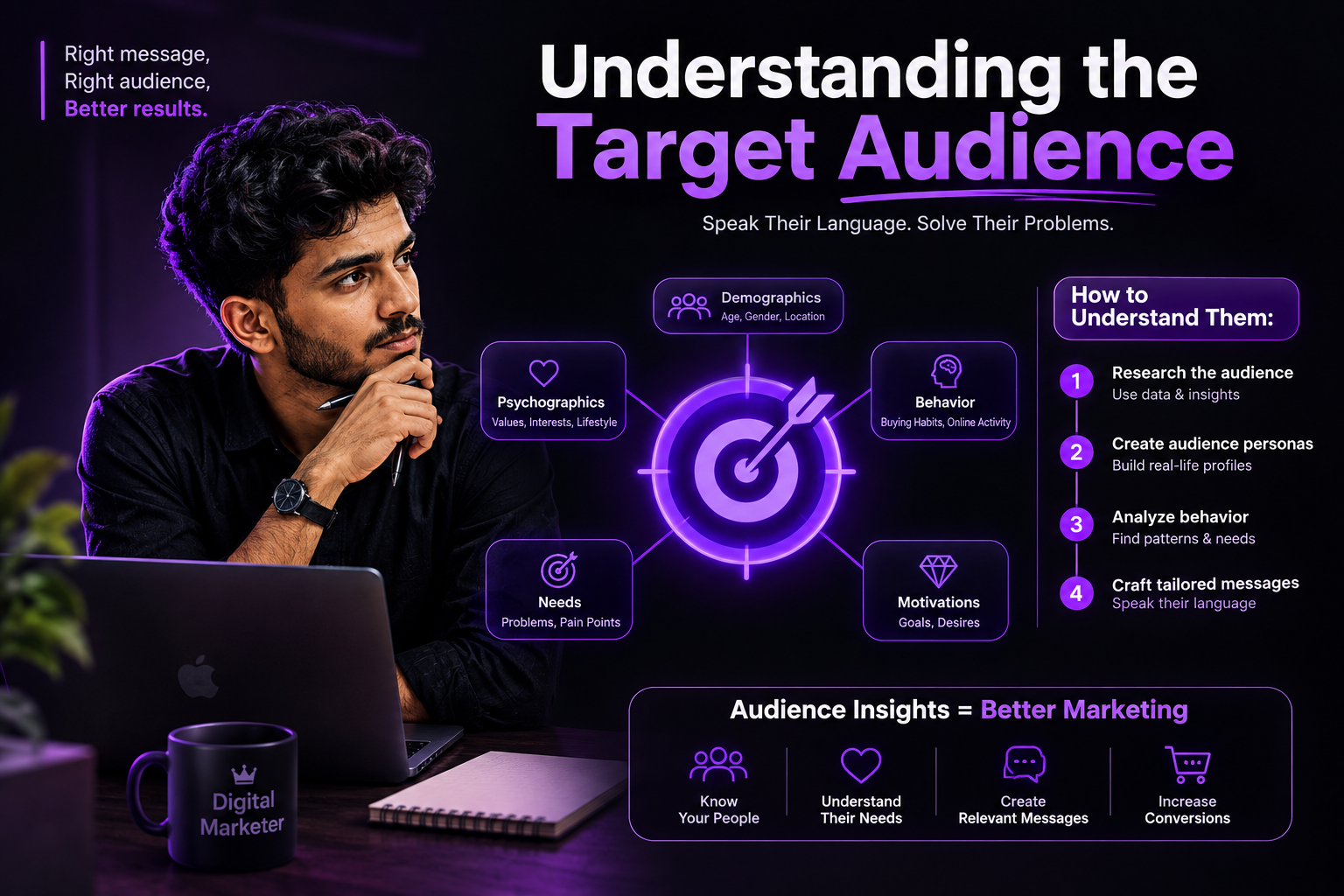
The first and most important Ad Copywriting Technique is understanding the target audience. Before writing any advertisement, marketers need to know exactly who they are trying to reach. Effective Ad Copywriting Techniques begin with detailed audience research because understanding the target audience helps marketers create relevant and persuasive ad copy.
A target audience can be defined based on factors such as age, gender, location, occupation, education, interests, income level, lifestyle, online behavior, and purchasing habits. Understanding these factors is an important part of Ad Copywriting Techniques because it helps marketers create advertisements that are more relevant, personalized, and engaging.
For example, a digital marketing course advertised to college students may focus on career opportunities, practical skills, internships, and future employment. An advertisement for the same course targeting business owners may focus on getting more customers, increasing sales, and improving online visibility. Using different ad copywriting strategies for different audience segments can make advertising campaigns more effective.
Therefore, marketers should ask questions such as:
Who is my ideal customer?
What problem are they facing?
What do they want to achieve?
What prevents them from taking action?
What type of language do they understand?
What motivates them to purchase?
These questions help marketers understand customer needs, preferences, pain points, and buying behavior. By applying the right Ad Copywriting Techniques, marketers can create personalized advertising messages that connect with the target audience and encourage them to take action.
Understanding the audience makes the advertisement more personal and effective. It is one of the most important Ad Copywriting Techniques for creating engaging ad copy, improving audience response, and increasing conversions.
2.
Understanding the Target Audience
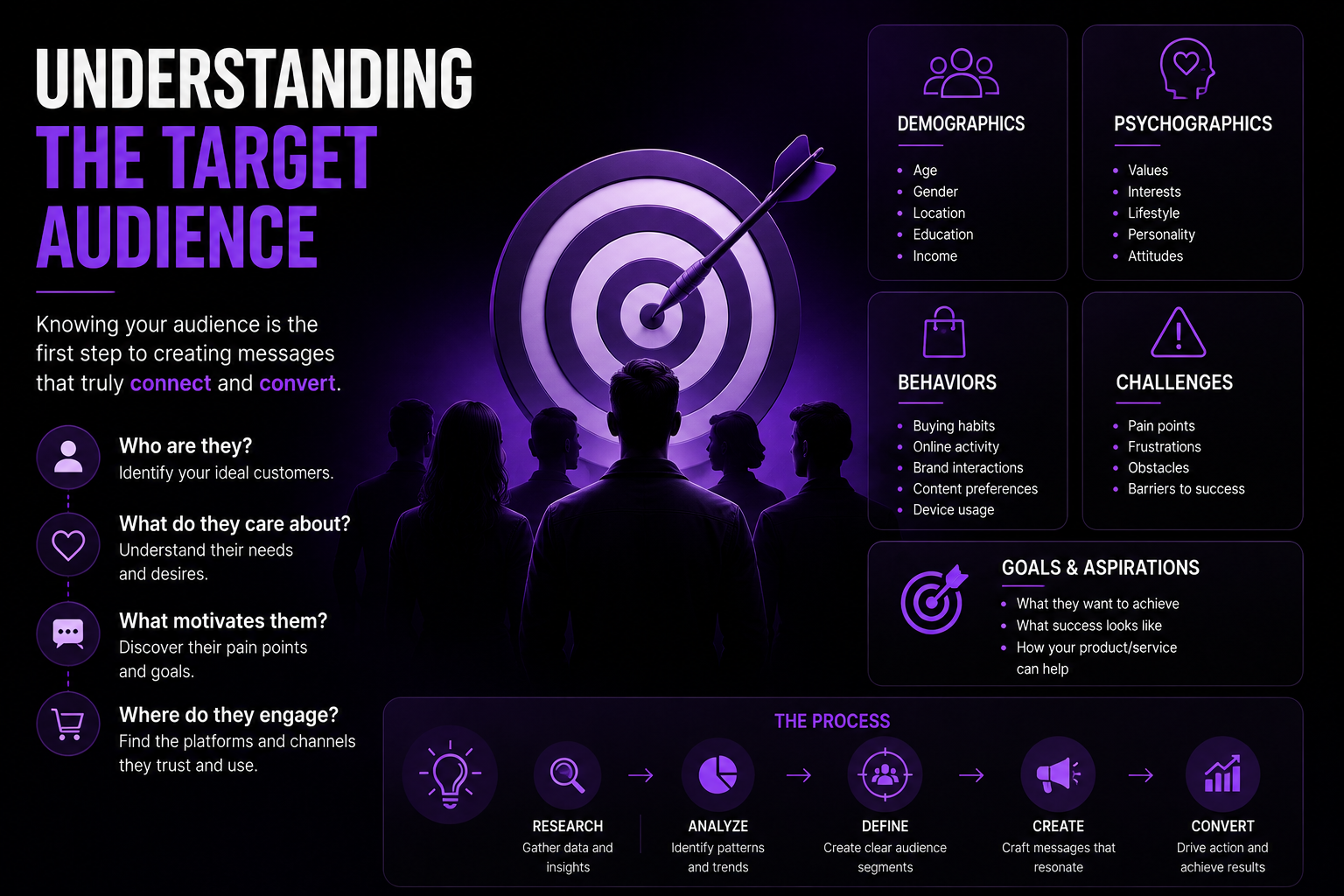
The first and most important Ad Copywriting Technique is understanding the target audience. Before writing any advertisement, marketers need to know exactly who they are trying to reach. Effective Ad Copywriting Techniques begin with detailed audience research because understanding the target audience helps marketers create relevant, persuasive, and engaging ad copy.
A target audience can be defined based on factors such as age, gender, location, occupation, education, interests, income level, lifestyle, online behavior, and purchasing habits. Understanding these factors is an important part of effective Ad Copywriting Techniques because it helps marketers create advertisements that are more relevant, personalized, and engaging.
For example, a digital marketing course advertised to college students may focus on career opportunities, practical skills, internships, and future employment. An advertisement for the same course targeting business owners may focus on getting more customers, increasing sales, and improving online visibility. Applying the right Ad Copywriting Techniques to different audience segments can make advertising campaigns more effective.
Therefore, marketers should ask questions such as:
Who is my ideal customer?
What problem are they facing?
What do they want to achieve?
What prevents them from taking action?
What type of language do they understand?
What motivates them to purchase?
These questions help marketers understand customer needs, preferences, pain points, and buying behavior. By applying effective Ad Copywriting Techniques, marketers can create personalized advertising messages that connect with the target audience and encourage them to take action.
Understanding the audience makes the advertisement more personal and effective. It is one of the most important Ad Copywriting Techniques for creating engaging ad copy, improving audience engagement, increasing click-through rates, generating leads, and boosting conversions.
3. Focus on Benefits Instead of Features
 Another important ad copywriting technique is focusing on benefits rather than only describing features.
A feature explains what a product or service has, while a benefit explains how that feature helps the customer.
For example:
Feature:
“20+ hours of digital marketing classes.”
Benefit:
“Learn practical digital marketing skills at your own pace and prepare for your career.”
The feature provides information, but the benefit gives the customer a reason to care.
When writing ad copy, marketers should convert product features into customer-focused benefits.
For example:
- “Fast delivery” → “Get your order delivered quickly.”
- “24/7 customer support” → “Get help whenever you need it.”
- “Water-resistant material” → “Stay protected even in rainy weather.”
This approach makes advertisements more persuasive.
4. Using Relevant Keywords
Keywords are particularly important in search advertising. People use specific words and phrases when searching for products, services, information, or solutions online.
For example, a person searching for:
“best digital marketing course in Kerala”
is likely looking for a digital marketing course.
An advertiser could create an advertisement such as:
“Best Digital Marketing Course in Kerala – Learn SEO, Google Ads, Meta Ads & More.”
The keyword is naturally included in the ad copy, making the advertisement more relevant to the search.
Keyword research can also help marketers understand customer needs. By identifying popular search terms, marketers can discover what people are interested in and create advertisements that match those interests.
However, keywords should be used naturally. Overusing keywords can make the advertisement look unnatural and reduce its quality.
5. Understanding Search Intent
Understanding search intent is another important part of ad copywriting.
Search intent refers to the reason why someone performs a particular search.
For example:
“What is SEO?”
This represents informational intent.
“Best SEO course”
This represents commercial investigation.
“Buy running shoes online”
This represents transactional intent.
“Nike official website”
This represents navigational intent.
Each type of search requires a different advertising message.
Someone searching for information may not be ready to purchase anything. Someone searching for a specific product may already be close to making a purchase.
By understanding search intent, marketers can create advertisements that match the customer’s stage in the buying journey.
6. Using Emotional Triggers
Human emotions have a major influence on purchasing decisions. Effective advertisements often connect with emotions such as curiosity, excitement, confidence, fear of missing out, happiness, security, or desire for success.
For example:
“Still struggling to get customers online? Discover a smarter way to grow your business.”
This advertisement identifies a problem and creates curiosity about the solution.
Another example:
“Ready to build the career you’ve always wanted?”
This connects with ambition and personal goals.
However, emotional marketing should always remain ethical. Marketers should not create false fear or make unrealistic promises simply to get clicks.
7. Creating a Strong Call-to-Action
A Call-to-Action (CTA) tells users what action they should take after reading the advertisement.
Examples include:
- Shop Now
- Learn More
- Get Started
- Sign Up Today
- Download Now
- Contact Us
- Book a Free Consultation
- Enroll Today
- Get Your Free Trial
A good CTA should be clear, direct, and action-oriented.
For example:
Weak:
“Information about our course is available here.”
Strong:
“Start Learning Today.”
The second version clearly tells the user what to do.
The CTA should also match the purpose of the advertisement. If the objective is to generate leads, “Get a Free Consultation” may be more appropriate than “Buy Now.”
8. Creating a Sense of Urgency
Urgency encourages people to take action instead of delaying their decision.
Examples include:
- “Limited Seats Available”
- “Offer Ends Soon”
- “Enroll Before August 30”
- “Limited-Time Discount”
- “Book Your Slot Today”
- “Only a Few Spots Left”
Urgency can be especially effective for promotional campaigns, event registrations, courses, and limited-time offers.
However, urgency must be genuine. Fake countdowns or false claims can damage customer trust and negatively affect the brand’s reputation.
9. Using Social Proof
Social proof is a psychological technique where people feel more confident about a product or service when they see that others have already used and trusted it.
Examples of social proof include:
- Customer reviews
- Testimonials
- Ratings
- Case studies
- Success stories
- Number of customers
- Awards
- Certifications
For example:
“Trusted by 5,000+ Businesses.”
Or:
“Join thousands of students who have started their digital marketing journey.”
Social proof reduces uncertainty and helps potential customers feel more confident about taking action.
10. Keeping Ad Copy Simple
One of the biggest mistakes in advertising is using complicated language.
People usually do not spend a lot of time reading an advertisement. Therefore, the message should be easy to understand.
Instead of:
“Our comprehensive digital marketing solutions facilitate enhanced business visibility and customer acquisition.”
A simpler version would be:
“Grow Your Business Online With Smarter Digital Marketing.”
Simple language makes the advertisement more accessible and memorable.
Good ad copy should communicate the main message quickly.
11. Creating Curiosity
Curiosity is another powerful technique for attracting attention.
An advertisement can create curiosity by asking a question, presenting an interesting fact, or suggesting that the audience may be missing something.
For example:
“Why are some businesses getting more customers online?”
This question makes the audience curious about the answer.
Another example:
“The digital marketing strategy your competitors don’t want you to know.”
Curiosity can be particularly effective for social media advertising, video advertising, blog promotion, and content marketing.
However, marketers should avoid clickbait. The advertisement should actually deliver what it promises.
12. Personalization
Personalization means creating advertisements that are relevant to specific users or audience segments.
Instead of showing the same message to everyone, marketers can create different versions for different groups.
For example:
For Students:
“Build Your Digital Marketing Career With Practical Skills.”
For Business Owners:
“Get More Customers With Data-Driven Digital Marketing.”
For Freelancers:
“Learn Digital Marketing Skills and Grow Your Freelance Career.”
Personalized advertisements can feel more relevant because they address the specific needs of the audience.
13. Storytelling in Ad Copy
Storytelling can make advertisements more memorable and emotionally engaging.
Instead of simply saying:
“Our product is effective.”
a brand can tell a short story about how the product helped a customer solve a problem.
For example:
“She started with zero clients. After learning digital marketing and applying the right strategies, she built her first successful online campaign.”
Stories help customers visualize themselves achieving similar results.
Storytelling is particularly useful for brand advertising, social media campaigns, video advertising, and testimonial-based campaigns.
14. Using Numbers and Specific Information
Numbers can make advertisements more specific and credible.
For example:
“Learn 10+ Digital Marketing Skills.”
is more specific than:
“Learn Many Digital Marketing Skills.”
Similarly:
“Save 30% Today.”
is stronger than:
“Get a Great Discount.”
Specific numbers help users understand the value of an offer quickly.
Numbers can be used for:
- Discounts
- Product quantities
- Customer numbers
- Course modules
- Years of experience
- Time savings
- Results
15. A/B Testing Ad Copy
Even experienced marketers cannot always predict which advertisement will perform best. Therefore, testing is essential.
A/B testing involves creating two different versions of an advertisement and comparing their performance.
For example:
Ad A:
“Learn Digital Marketing Online”
Ad B:
“Build Your Career With Digital Marketing”
Marketers can compare:
- Click-through rate
- Conversion rate
- Cost per click
- Cost per lead
- Return on ad spend
The better-performing version can then be improved further.
A/B testing can be performed on headlines, descriptions, CTAs, images, offers, and audience segments.
16. Matching Ad Copy With the Landing Page
The advertisement and landing page should provide a consistent customer experience.
For example, if the advertisement says:
“Get 50% Off Digital Marketing Courses.”
the landing page should clearly display the same offer.
If the advertisement promises one thing but the landing page provides something different, customers may become confused or lose trust.
This concept is called message match.
Strong message matching can improve user experience and potentially increase conversion rates.
17. Using Strong Value Propositions
A value proposition explains why customers should choose a particular product or service instead of its competitors.
A strong value proposition answers the question:
“Why should I choose you?”
For example:
“Learn practical digital marketing skills from industry-focused training with real campaign experience.”
The value proposition should be specific and customer-focused.
A good value proposition can help a brand differentiate itself in a crowded market.
18. Using Different Copywriting Formulas
Professional copywriters often use proven frameworks to structure advertisements.
One popular framework is AIDA:
Attention → Interest → Desire → Action
For example:
Attention:
“Want more customers online?”
Interest:
“Learn proven digital marketing strategies.”
Desire:
“Reach the right audience and grow your business.”
Action:
“Start Today.”
Another useful framework is PAS:
Problem → Agitate → Solution
For example:
Problem:
“Not getting enough website visitors?”
Agitate:
“Without traffic, even a great product can remain invisible.”
Solution:
“Use SEO and targeted digital marketing to reach potential customers.”
These frameworks help copywriters organize their ideas logically.
19. Ad Copywriting for Social Media
Social media advertising requires a different approach because users are often browsing for entertainment, communication, or information rather than actively looking for a product.
Social media ad copy should generally be:
- Attention-grabbing
- Conversational
- Short
- Emotionally engaging
- Easy to understand
For example:
“Your competitors are already online. Is your business?”
This short sentence can create curiosity and encourage business owners to think about their digital presence.
Social media copy can also use emojis, questions, short sentences, and conversational language depending on the brand.
20. Using AI for Modern Ad Copywriting Techniques
Artificial Intelligence is becoming an important tool for modern digital marketers. AI tools can help marketers generate headline ideas, create multiple versions of ad copy, analyze keywords, identify audience segments, and experiment with different messaging styles.
For example, a marketer can provide a product description and ask an AI tool to create several headline variations.
However, AI-generated content should not be published without human review. Marketers should check:
- Accuracy
- Brand voice
- Originality
- Clarity
- Emotional relevance
- Customer expectations
The most effective approach is often a combination of AI assistance and human creativity.
21. Avoiding Common Ad Copywriting Mistakes
There are several common mistakes that can reduce the effectiveness of advertisements.
Using Too Much Information
Long and complicated advertisements can overwhelm users.
Making Unclear Claims
Statements such as “We are the best” are not very convincing unless supported by evidence.
Weak CTA
If users do not understand what to do next, they may simply leave.
Ignoring the Audience
An advertisement that tries to appeal to everyone may fail to connect strongly with anyone.
Using Fake Urgency
False scarcity can damage trust.
Ignoring Mobile Users
Most digital users consume content on mobile devices, so ad copy should be easy to read on smaller screens.
Avoiding these mistakes can significantly improve advertising quality.
22. Measuring Ad Copy Performance
Creating an advertisement is only the beginning. Marketers must measure its performance to determine whether it is achieving its objectives.
Important metrics include:
Click-Through Rate (CTR)
CTR measures how many people click an advertisement compared with the number of people who see it.
Conversion Rate
Conversion rate measures how many users complete the desired action after clicking the advertisement.
Cost Per Click (CPC)
CPC measures how much an advertiser pays for each click.
Cost Per Lead (CPL)
CPL measures the cost of generating a lead.
Return on Ad Spend (ROAS)
ROAS measures the revenue generated compared with the advertising expenditure.
By analyzing these metrics, marketers can identify successful copy and improve underperforming advertisements.
Measuring Ad Copywriting Performance and Conversions
- Ad copywriting is one of the most valuable skills in digital marketing. In an environment where consumers are constantly exposed to advertisements, businesses need messages that can stand out, communicate value, and encourage action.
Effective ad copywriting begins with understanding the target audience. From there, marketers can create powerful headlines, focus on benefits, use relevant keywords, understand search intent, create emotional connections, use strong calls-to-action, build urgency, and include social proof.
Techniques such as personalization, storytelling, A/B testing, value propositions, and proven copywriting frameworks like AIDA and PAS can make advertisements even more effective. Modern technologies such as artificial intelligence can also support marketers by generating ideas and improving efficiency, but human creativity and strategic thinking remain essential.
Ultimately, the goal of ad copywriting is not simply to make an advertisement sound attractive. The real goal is to connect the right message with the right audience at the right time and motivate them to take action.
A successful ad copy answers three important questions:
What does the customer need?
How can the product or service solve that need?
Why should the customer take action now?
When these questions are answered clearly and creatively, ad copy becomes more than just text. It becomes a powerful marketing tool capable of attracting attention, building trust, generating leads, increasing conversions, and contributing to long-term business growth. Therefore, mastering ad copywriting techniques is an essential step for anyone who wants to build a successful career in digital marketing.
auther:Jesil kt